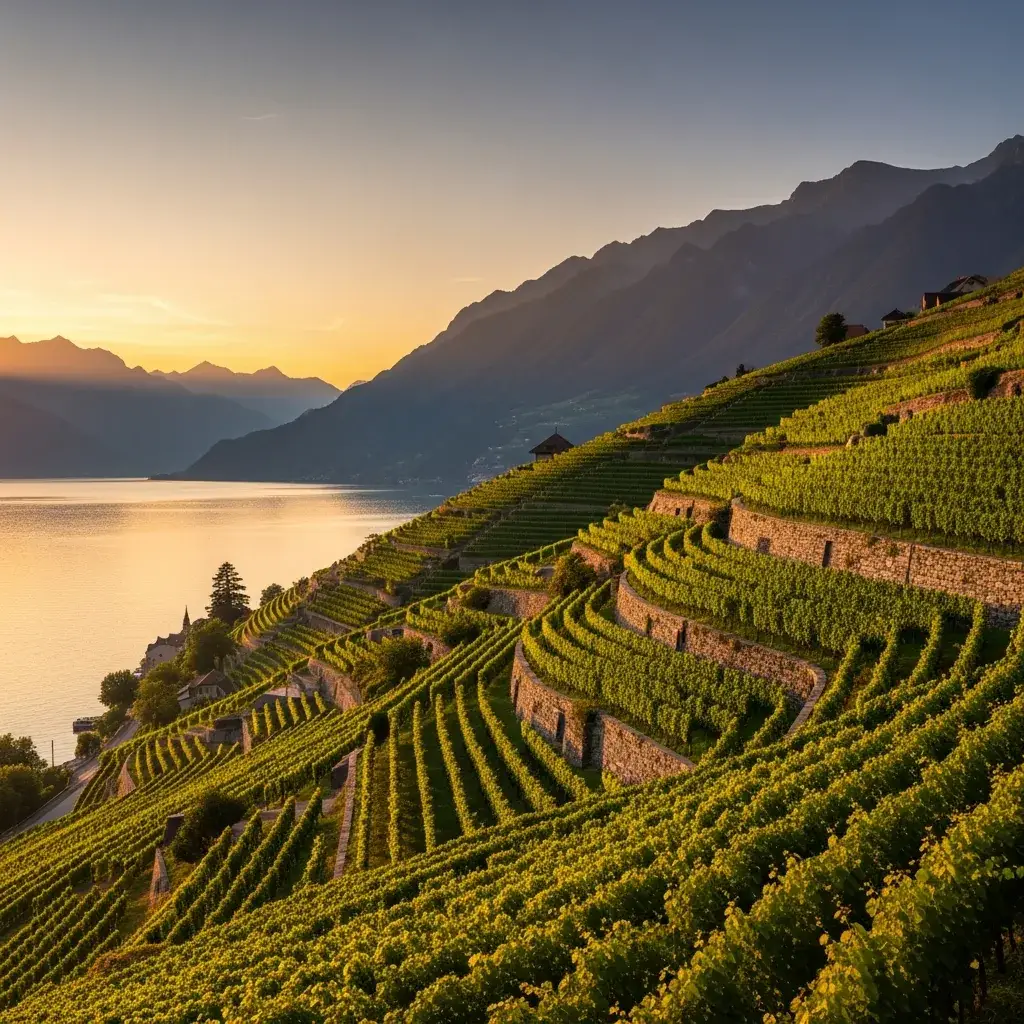
Switzerland is one of Europe's best-kept wine secrets. With 863 wineries across six distinct wine regions, the country produces wines from over 200 grape varieties — more variety per hectare than almost any other wine-producing nation. Yet less than 2% of Swiss wine is ever exported. To taste it, you come here.
From the steep, sun-drenched terraces of Lavaux overlooking Lake Geneva to the Mediterranean-climate vineyards of Ticino, Swiss wine reflects its geography: diverse, precise, and shaped by extreme terrain. The country's four language regions (German, French, Italian, and Romansh) each bring their own winemaking traditions, grape varieties, and drinking culture.
Swiss Wine Regions


Swiss Grape Varieties
Switzerland cultivates over 200 grape varieties, from international stars like Pinot Noir and Chardonnay to indigenous rarities found nowhere else: Petite Arvine, Cornalin, Humagne Rouge, Amigne, and Räuschling. Here are the varieties you'll find at Swiss wineries.
White Grapes
Chasselas
Swiss Origin332 wineries · Vaud, Valais, Geneva, Three Lakes
Müller-Thurgau
174 wineries · German-speaking Switzerland
Petite Arvine
Swiss Origin43 wineries · Valais
Chardonnay
33 wineries · German-speaking Switzerland, Geneva, Valais
Sauvignon Blanc
20 wineries · German-speaking Switzerland, Geneva
Räuschling
Swiss Origin15 wineries · German-speaking Switzerland
Heida
Swiss Origin4 wineries · Valais
Amigne
Swiss Origin3 wineries · Valais
Red Grapes
Pinot Noir
516 wineries · German-speaking Switzerland, Valais, Three Lakes, Vaud
Gamay
88 wineries · Valais, Geneva, Vaud
Merlot
64 wineries · Ticino, Geneva, Valais
Syrah
55 wineries · Valais, Geneva
Gamaret
Swiss Origin28 wineries · Vaud, Geneva, Valais
Cornalin
Swiss Origin15 wineries · Valais
Garanoir
Swiss Origin13 wineries · Vaud, Geneva, Valais
Humagne Rouge
Swiss Origin10 wineries · Valais
Cabernet Franc
5 wineries · Ticino, Geneva
Plan Your Visit
Ready to explore Swiss wine country? Start with the tools below.
Plan Your Visit
When to Go
May is the golden month. Open Wine Cellars events run across all six regions (May 1–30), the weather is warm, and summer crowds haven't arrived. September–October brings harvest season with vendange festivals and the energy of working vineyards.
Getting Around
Swiss public transport reaches every wine region. Zurich to Sion (Valais) is under 3 hours by train. Lausanne to the heart of Lavaux takes 15 minutes by S-Bahn. Many Open Wine Cellars events include a public transport pass in the ticket price.
What to Expect
Swiss wineries are small, family-run operations, not the Napa Valley. Tastings are often informal, sometimes in the actual cellar. Many require advance booking. During Open Wine Cellars events, everything is walk-in friendly.
What to Buy
Since Swiss wine barely exists outside Switzerland, a visit is your chance to stock up. Prioritize: Petite Arvine (Valais), Chasselas from a named Lavaux village, Ticino Merlot Riserva, Pinot Noir from Graubünden, and Œil-de-Perdrix from Neuchâtel. Cellar-door prices: CHF 12–25 for excellent bottles.
Region Comparison
| Region | Hectares | Signature Grapes | Best For |
|---|---|---|---|
| Valais | ~5,000 | Petite Arvine, Cornalin, Humagne Rouge | Indigenous varieties, alpine terroir, highest vineyards in Europe |
| Vaud | ~3,800 | Chasselas, Pinot Noir, Gamay | UNESCO Lavaux terraces, Lake Geneva views, Chasselas mastery |
| Geneva | ~1,400 | Gamay, Chasselas, Chardonnay | Urban wine country, experimental winemaking, cycling tours |
| Three Lakes | ~900 | Chasselas, Pinot Noir, Œil-de-Perdrix | Œil-de-Perdrix rosé, scenic lake walks, Neuchâtel Non Filtré |
| Ticino | ~1,100 | Merlot (80%+), Bondola | Mediterranean climate, Italian flair, top Merlot |
| German-speaking Switzerland | ~2,700 | Pinot Noir, Müller-Thurgau | Rising Pinot Noir quality, Graubünden's Bündner Herrschaft, Heidiland |
Frequently Asked Questions
How many wine regions does Switzerland have?
Six: Valais (the largest, ~5,000 hectares), Vaud (home to UNESCO Lavaux), Geneva, Ticino, Three Lakes (Neuchâtel, Biel, Morat), and German-speaking Switzerland.
What is the best Swiss wine region to visit?
For first-time visitors, Lavaux in Vaud offers UNESCO scenery above Lake Geneva. For indigenous grape varieties, Valais is unmatched. For Mediterranean atmosphere, Ticino's Merlot country is ideal. For rising-star Pinot Noir, try Graubünden's Bündner Herrschaft.
When is the best time to visit Swiss wine regions?
May is peak season. Open Wine Cellars events run across all regions. September–October is harvest season with special events. April–June and September–October are best for vineyard hikes.
Why is Swiss wine so rare outside Switzerland?
Switzerland produces ~100 million liters annually (about 1% of global production). The Swiss consume 98% domestically. With 14,569 hectares farmed by 2,500+ small winegrowers, there simply isn't enough to export.